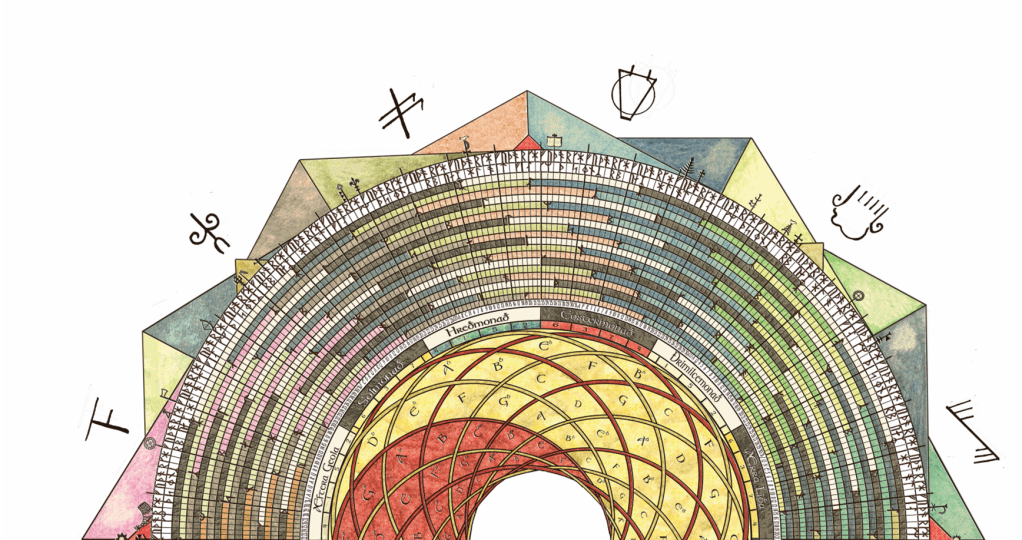
The Anglo Saxon Runestav Calendar is a working reconstruction of the runestav calendars found in Norway, but adapted with Anglo Saxon cultural artifacts. The month names, feast days, the runes themselves, and the design choices all reflect a uniquely Anglo Saxon narrative. Though the surviving calendars are from the 1300s, it is almost certain that the English, Norse, and Germanic peoples all used a similar calendar much earlier, well before the Christian era.
The runestav calendars were used by Christian clergy to track the solar and lunar dates simultaneously particularly to determine the date of easter. But they were also used by laypersons to track the days, months and years as well as holidays.
The month names come from Anglo Saxon times and are in old English. The border and embellishments are from the Lindisfarne Gospels, created around 700 CE.
The runestav calendar like many other luni-solar calendar systems tracks time using the Metonic cycle, 19-year amount of time it takes for the 365 day solar year to realign with the 354 day “lunar year.”
Step 1 – determine the year
Decide the Gregorian (modern) calendar date you want to find.
For example: March 1, 2026.
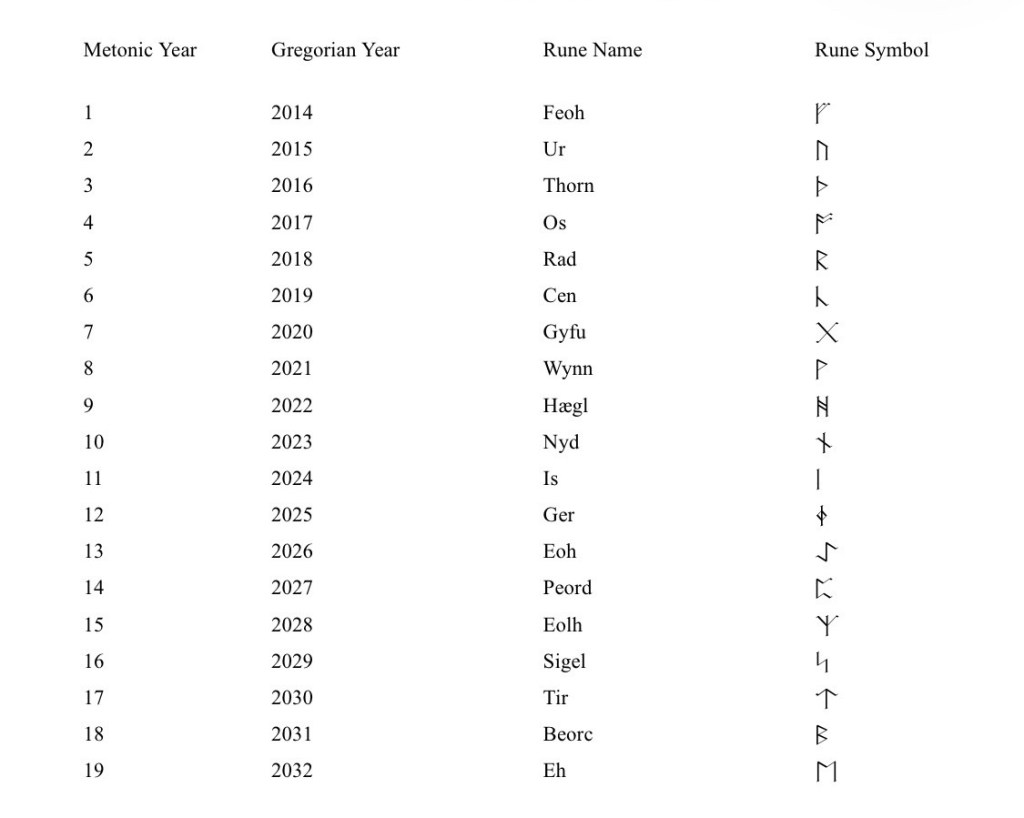
Divide 2026 by 19 and take the remainer which is 12, Then add one to get 13
On the Anglo Saxon runestav calendar year 13 is Eóh. Here’s a cheat sheet for our current 19 year cycle with the Anglo Saxon Futhark:
On the Anglo Saxon Runic Calendar, the innermost ring shows the familiar Gregorian months and days.
Locate March 1 on that inner ring.
From that date, move straight outward through the calendar rings.
Each ring represents one year in the 19-year Metonic cycle. Stop when you get to the 13th ring. This is the year Eóh. So you have found the year!
Step 2 – determine the month
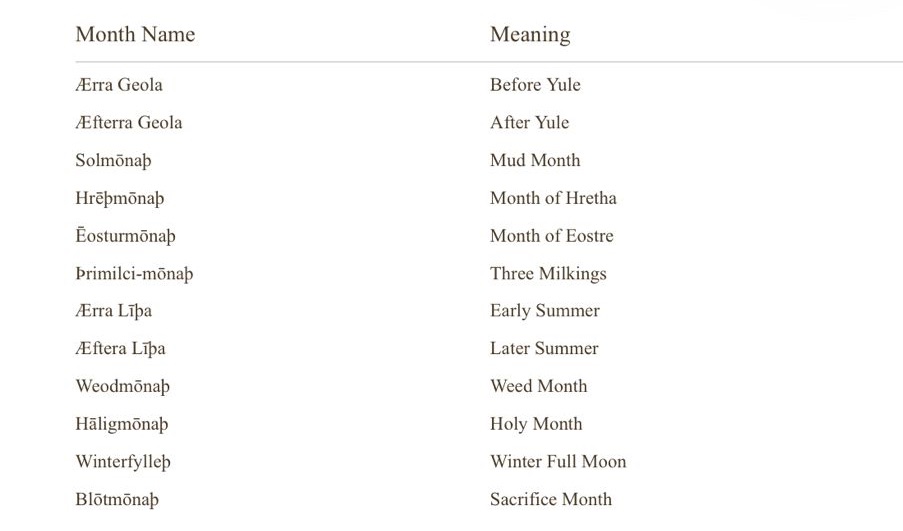
Sticking with our same example, March 1st 2026. Once we find what Runic year we are in, Eoh, we can see what Anglo Saxon month we are in. The month names are found in the ring just inside the gregorian calendar ring. You can see on that March 1st in Eoh is the Anglo Saxon month of Hrethmonath.
Here are the Anglo Saxon Month names and their meanings. These come to us from the Venerable Bede (672/3 – 735), an English monk, author and scholar.
In Lunisolar calendar systems a “leap” month is added every two or three months to make up the 11 day gap between the 365 day solar year and the 354 day lunar “year”. The Anglo Saxons called this leap month Þriliða, or third summer, and they placed it between Ærra Liða (before summer ) and Æfterra Liða (after summer).
Step 3: determine the lunar phase
Each new month begins on a new moon, and is defined by a single color for each of the 19 years. You can see that March 1st in the 13th year of Eóh falls in the middle of a swath of color. Since the beginning of the month is a new moon, the middle of the month is a full moon.
Step 4: determine the weekday
In the middle line in the traditional runic calendar and the second to last ring in this reconstructed version is comprised of the first 7 runes of the younger Futhark repeated 52 time to make 52 “weeks”.
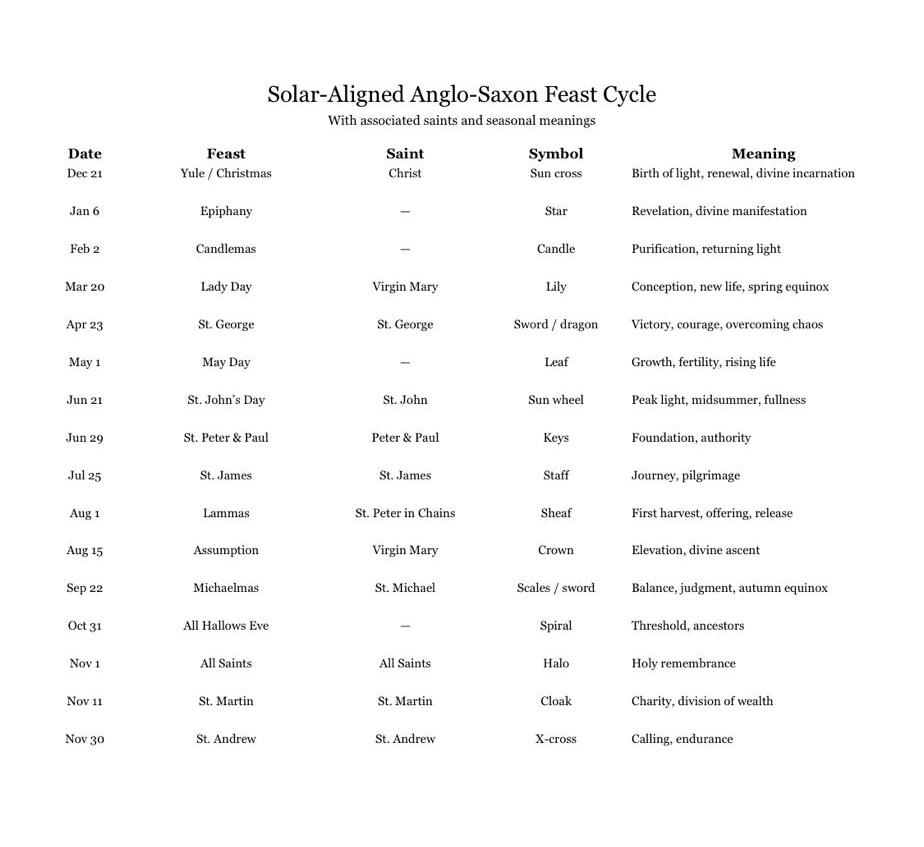
Step 5: determine the proximity to holidays
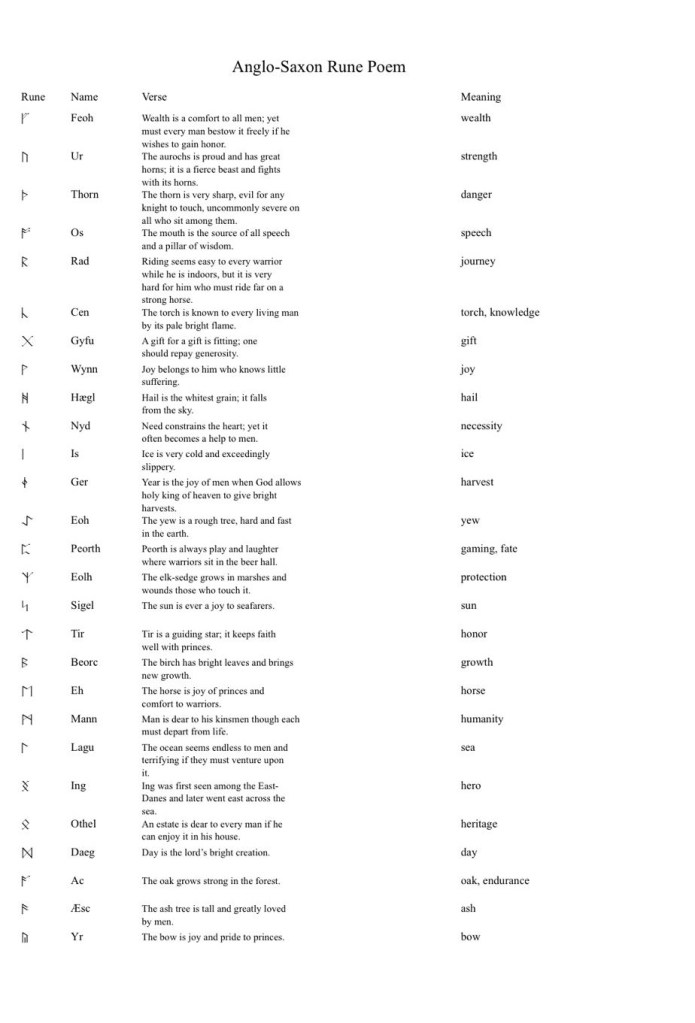
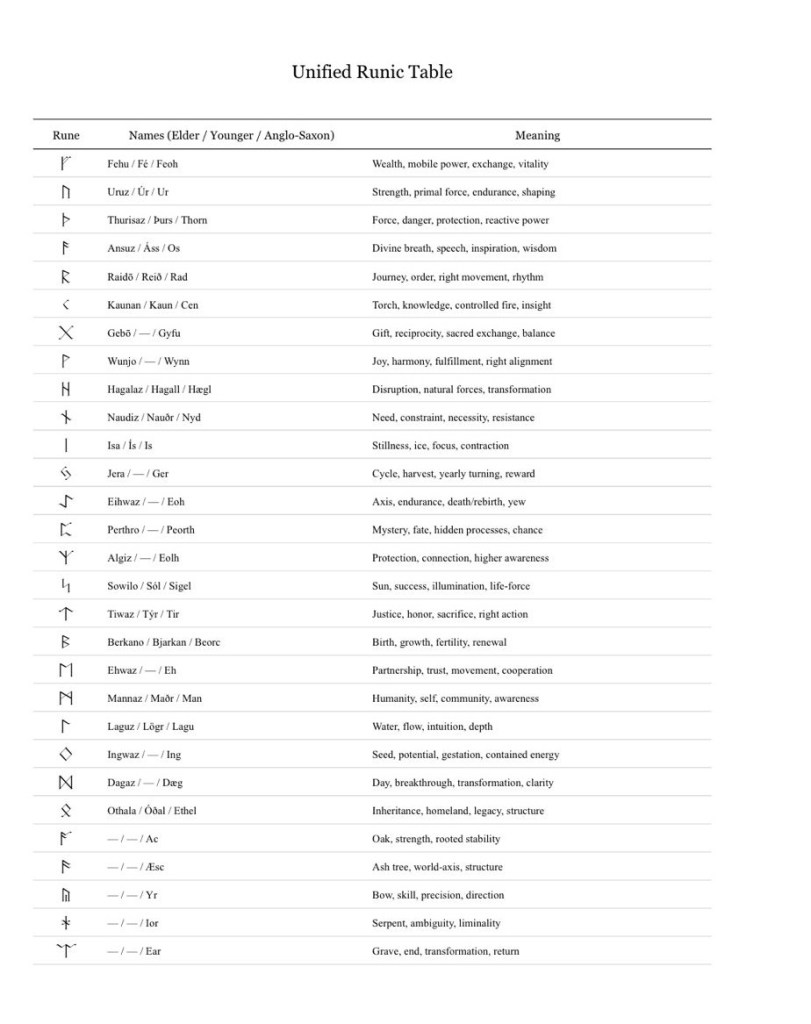
Here is a table to help start to understand the meaning of each rune. The Anglo Saxon rune poems are the earliest recorded from as old at the 800, the younger Futhark was next about the 1200s, then the Icelandic in the 1300s. I would recommend cross referencing the rune poems to get your own sense of the meaning of each rune.

 Lunisolar Calendars