
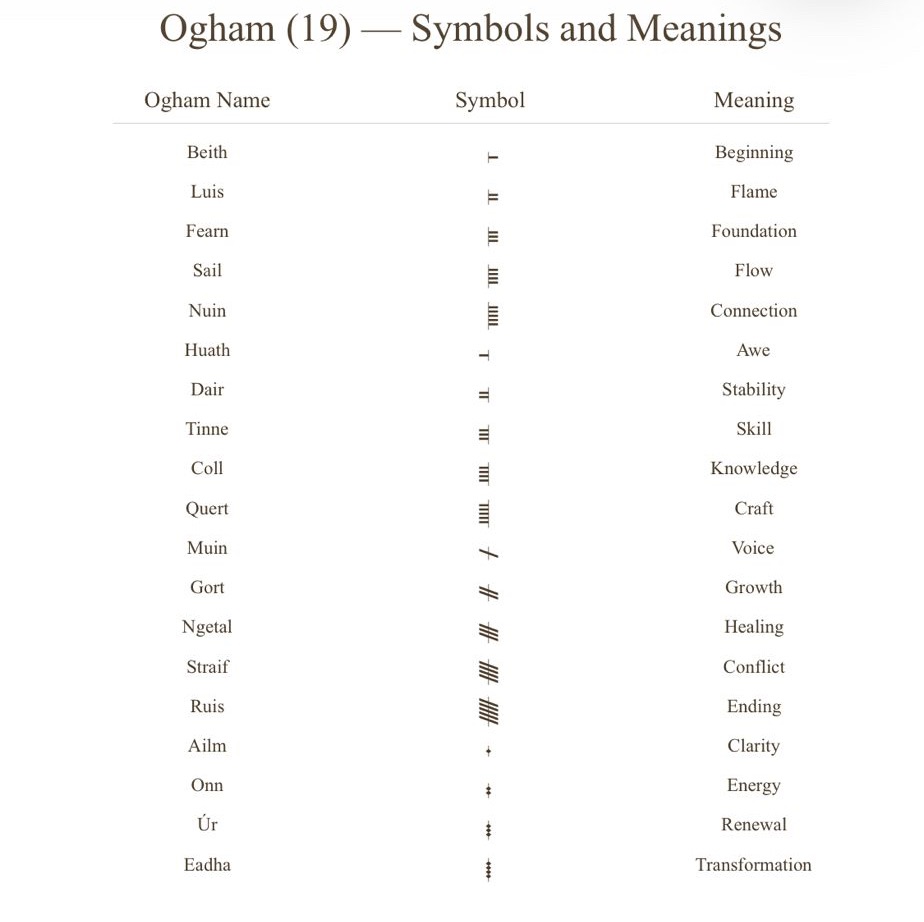
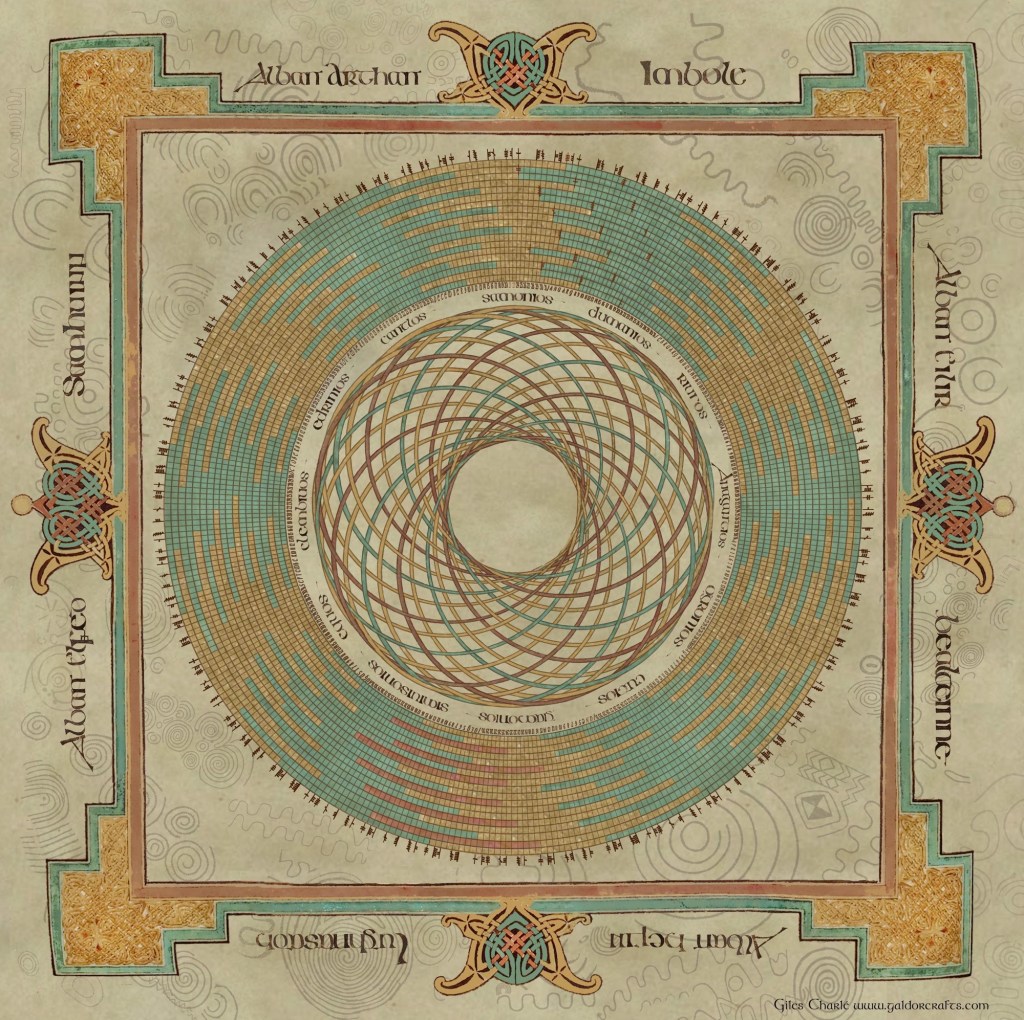
The Cnóbha Celtic Ogham Calendar is similar to the Anglo Saxon and Norse calendars in that it is based on the 19 year lunisolar cycle. Rather than being based in Anglo-Saxon or Norse cosmology like the, the Cnóbha calendar is rooted in the cultures of the Romano and Irish Celts.
I took some artistic and ancestral liberties and speculated that the celts might have used the Ogham for calendar purposes similar to how the Norse and Anglo saxons used the runes.
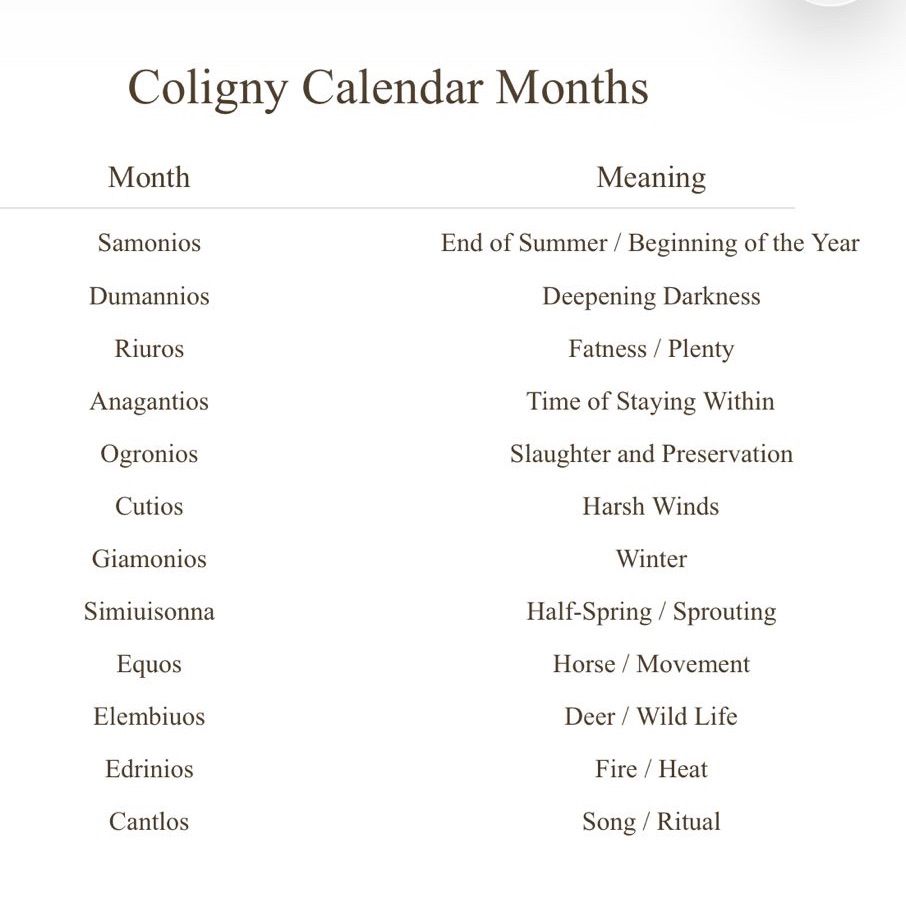
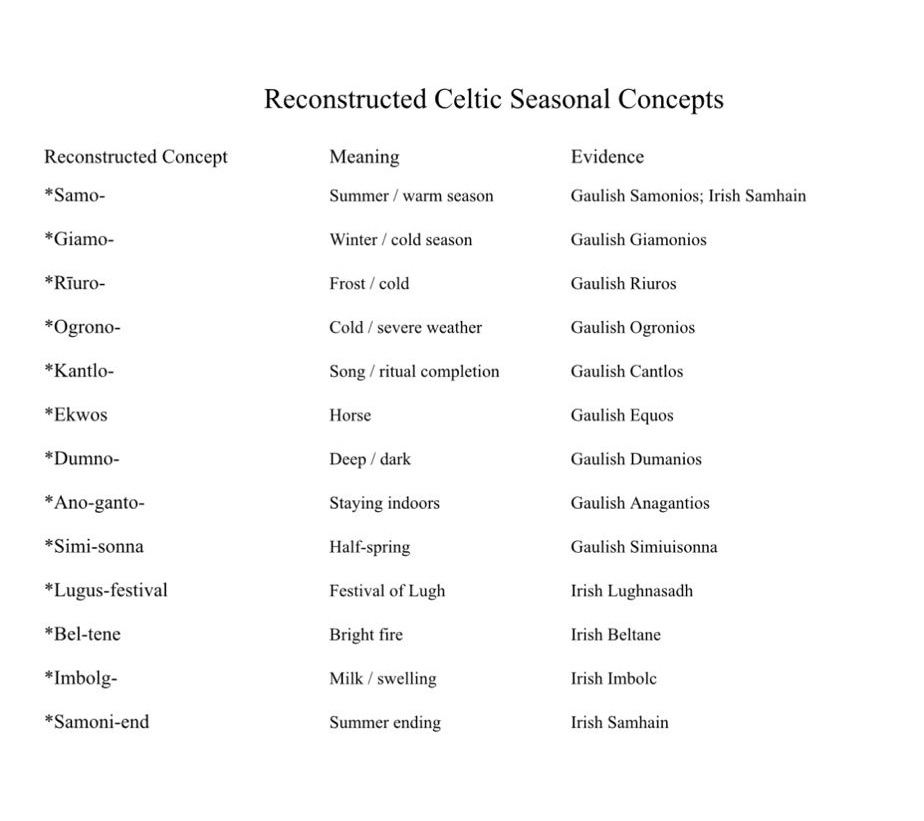
The month names are from the Coligny Calendar, a luni solar, metonic calendar discovered in France from the 2nd century. Making it hundreds of years older than the known runic calendars. The month names are written in the Gaulish language using Latin letters and operates on a repeating five-year cycle.
The design theme is inspired by the Lindisfarne Gospels, an illuminated manuscript created in 700 in England.
The whole calendar is circled by the glyphs found at the lunar solar temple of Knowth or Cnóbha found in the county of Meath in Ireland and thought to be built around 3200 BC.
The Names around the border are the four cross quarter holidays known historically old Irish text and archaeological evidence, plus reconstructed Welsh names for the solstices and equinoxes.
Let’s get into using the calendar
Step 1: Determine the year
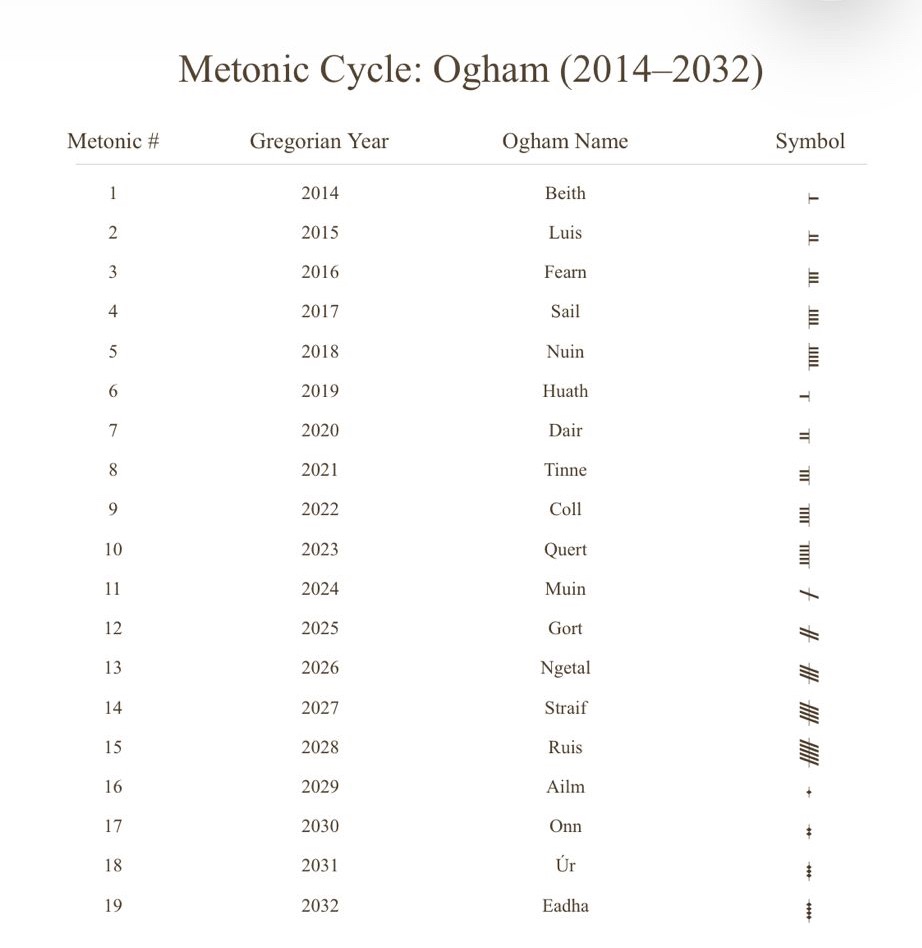
Find today’s date: for example March 1st 2026 and divide 2026 by 19. Take your remainder, which is 12 and add 1, to get 13. This year is the 13th year in 106th lunisolar cycle since the “the birth of Christ.
Now in the Gregorian ring find the date March 1st and follow the concentric rings out until you get to the 13th ring, which is Ngetal. So we are in the year Ngetal
Step 2: Determine the month
You will see that March one is in the coligny month of Anagantios.
So we are in the Ogham year it Ngetal in month of Anagantios
Step 3: Determine the lunar phase
Each month begins on a new moon. You can see that we are in the second quarter of the month Anagantios. Which means that we are in a waxing gibbous moon.
Step 4: Determine the week day
Step 5: Determine the proximity to a holiday

 Lunisolar Calendars